Marketing / 6 MIN
iGaming marketing: how to read the channel data for 2027
SEO 18.0%, streamers 16.8%, affiliate marketing 16.2%: how affiliates should read the survey and what to change in a media mix using their own numbers.
 JUS Editorial6 min read

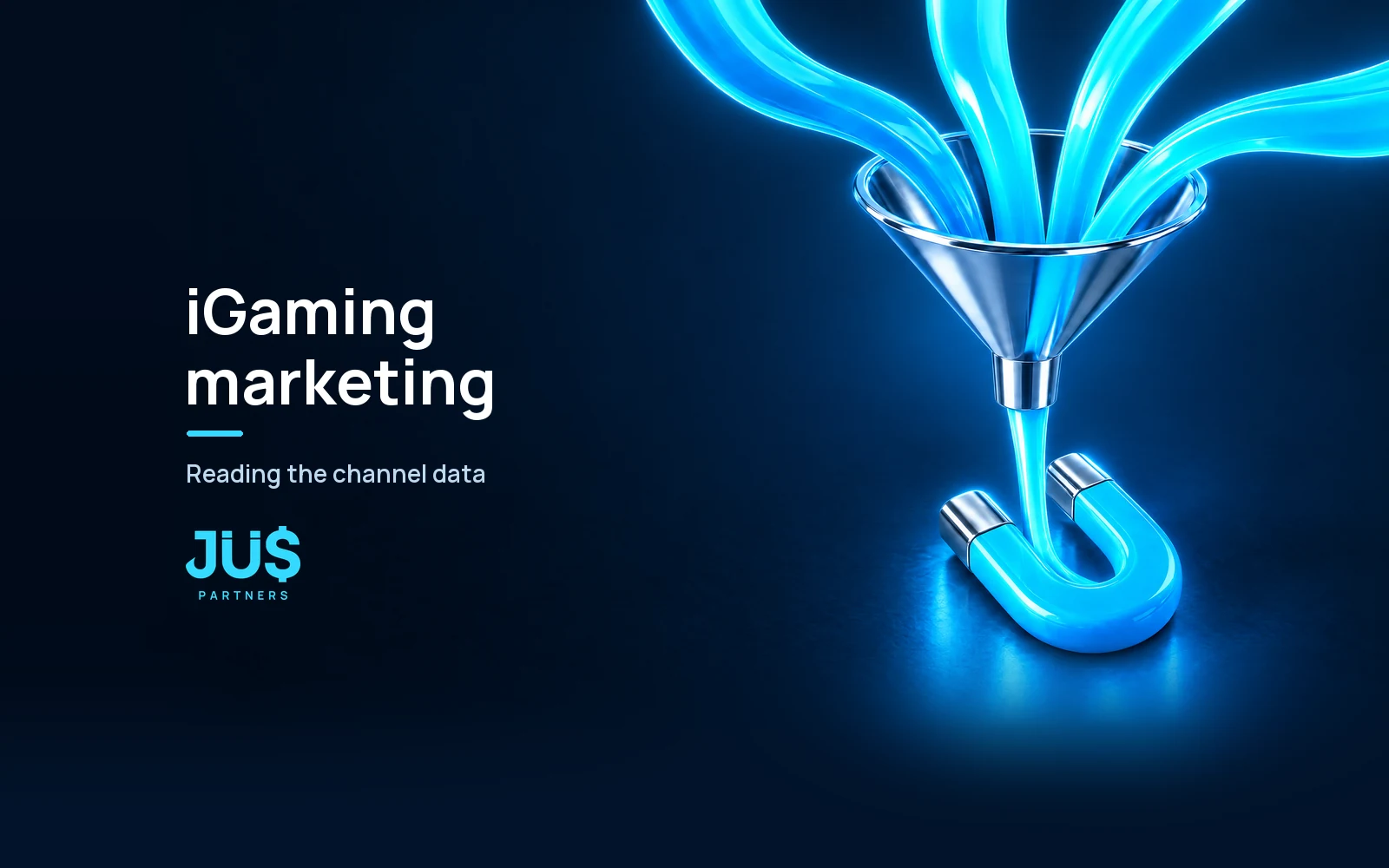
iGaming marketing is how operators and affiliates acquire and keep players, through SEO, streamers, affiliate programmes, paid social and other channels. In the SOFTSWISS 2027 iGaming Trends report, industry respondents ranked SEO first for 2027 (18.0%), followed by streamers and influencers (16.8%) and affiliate marketing (16.2%). The gaps are too small to justify moving budget on those numbers alone, so here is how to read them and what to test in your own media mix.
What the survey found#
The question was which channel will dominate in 2027. The remaining answers were paid social 15.3%, organic social 11.7%, SEM and PPC 6.9%, programmatic and display 6.3%, content marketing 4.5% and email 3.0%. The total comes to 100, so respondents appear to have picked one option each.
Grouping the answers by type of work makes the picture clearer. The grouping is ours.
Group | Channels | Combined answers | Speed of results | Main risk |
|---|---|---|---|---|
Owned assets | SEO, organic social, content, email | 37.2% | Months | Search updates, domain blocks |
Partners and creators | Streamers and influencers, affiliate marketing | 33.0% | Depends on the placement | Influencer bans, reliance on one creator |
Paid media | Paid social, SEM and PPC, programmatic | 28.5% | Days | Platform rules, moderation, rising prices |
The jobs market adds another signal. Recruiter Pentasia says the fastest-growing marketing brief is for streamer and influencer managers, while demand for affiliate managers stays steady. Operators are investing in both lines at once.
How to read the percentages#
They are opinions. The survey asked which channel will dominate. It did not measure budget share, FTD volume or payback.
The gaps are small. As a rough guide, with 500 respondents and a random sample, the margin of error on 18% would be about ±3.4 points at 95% confidence, or 14.6% to 21.4%. Streamers, affiliate marketing and paid social all fall inside that range. The real sample was not random, so treat this as a loose estimate, but the survey does not settle the order of the top four. The report itself calls the market fragmented.
Channels overlap. Affiliate marketing is a payment model, while SEO and streaming are traffic sources. A webmaster with an SEO site on RevShare fits both answers, as does a streamer with an affiliate link. Respondents may have filed the same activity under different lines.
Averages hide GEOs. The survey is global. What works in one country may be banned in another.
Martin Calvert, CMO at All-In Global, explicitly advises caution about anyone naming a single dominant channel. His argument is that operators need a blend of strong affiliates, in-house teams and outside expertise.
Where the law limits channels#
Before adding a channel, check it against the law in your GEO. Three recent examples:
Australia. Parliament passed a betting advertising reform in August 2026. Athletes, celebrities and influencers will no longer be able to promote betting, and online ads will be limited to logged-in adults who have not opted out. The main provisions start on 1 January 2027.
Colorado. SB26-131 has applied since 12 August 2026. Sports betting operators may not send push notifications or texts soliciting bets or deposits, and the ban on targeting under-21s also covers an operator's marketing affiliates.
Brazil. Betting advertising is banned along with betting itself under Provisional Measure 1.394/2026. As of 8 November the ban stands, so treat every channel into that market as closed.
For how these decisions fit together, see the iGaming trends 2027 overview.
What to change in your mix#
Begin with your own data. The survey can suggest what to test, but the decision comes from your statistics.
Break results down by source. Tag the source, placement and creative in your sub-parameters so that registrations, FTDs, qualified FTDs and NGR sit in one view.
Track cost per qualified FTD and NGR at 30, 60 and 90 days. Cost per click explains very little.
Check concentration: how much of your payout depends on one source and one GEO. Set your own threshold, and half of income is a reasonable place to start.
Pick one channel to test and fix a baseline and KPIs before launch.
Agree approval in advance by setting out the source, GEO and creatives in a traffic brief.
Review the mix every quarter and straight after any change in the law in your GEO.
Example with illustrative numbers. Two sources, US$5,000 spent on each.
Metric | Source A | Source B |
|---|---|---|
FTDs | 100 | 125 |
Qualified FTDs | 80 | 62 |
Cost per FTD | 50 | 40 |
Cost per qualified FTD | 62.5 | 80.6 |
Source B wins on cost per FTD and Source A on cost per qualified FTD. Decide on cost per FTD alone and the budget goes to the source that qualifies worse.
What this means for affiliates. The survey shows a market split across four or five channels. Use that as a prompt to check your reliance on one source and add a second where the GEO and offer allow it. Operators in mature European markets are also moving money into CRM and retention, so measure player value over time as well as the first deposit.
Common questions#
Which channel will lead iGaming marketing in 2027?
There is no clear leader. In the SOFTSWISS survey, SEO took 18.0%, streamers and influencers 16.8% and affiliate marketing 16.2%, and those gaps fall within the rough margin of error for a sample of that size.
Should I move budget into SEO or streamers?
Only if your own data supports it. Compare cost per qualified FTD and 90-day NGR by source, and check that the channel is allowed in the GEO and the offer.
Which metric should I use to compare channels?
Use cost per qualified FTD and NGR over a fixed period such as 90 days. Cost per click and plain FTD cost do not show how many players reached the payment stage and stayed.
Can I work with influencers to advertise casinos?
It depends on the country and the offer terms. Australia's 2026 reform bars influencers from promoting betting, so clear every integration before it goes live.
JUS runs its own Facebook and SEO buying, and affiliates agree the source, GEO, payout, cap, hold and reconciliation with their manager before launch: see the affiliate page.
For industry professionals, 18+. Before launching, check that gambling and its advertising are legal in your GEO.
Share this article